The Original Mothers Day Was About Survival, Not Brunch
“God could not be everywhere and, therefore, he made mothers.” quote from Rudyard Kipling, Nobel Prize in Literature 1907
Our first Mother’s Day in Puerto Rico was a shock. Everything was closed! In Puerto Rico Mother’s Day is way bigger than in most of the U.S. mainland. Puerto Ricans treat Mother’s Day as a holiday like Christmas and Thanksgiving combined. Many restaurants, stores, and malls shut down completely so staff can be with their moms. In Puerto Rico, Mother’s Day is a Family Day. It is a time to spend with mothers and extended families honoring their mothers. It is not a shopping day.
While modern Mother’s Day often centers on gifts, the holiday’s true origins reveal a different story, one rooted in grief, public health and community survival during the Civil War era. To understand why the holiday feels so disconnected from its intent today, we must return to May 9, 1914, when President Woodrow Wilson signed a proclamation that designated the second Sunday in May as Mother’s day. But the back story is 100% a women-led campaign.
Julia Ward Howe, who you may remember, is famous for writing The Battle Hymn of the Republic, in the 1870s. After the Civil War, she pushed for a “Mother’s Day for Peace” Her idea was for moms to gather and promote peace so no more sons would die in war. She even wrote a “Mother’s Day Proclamation.” But it fizzled out.
In 1872, Ann Reeves Jarvis, was already an influential figure in the city of Webster, Taylor County, West Virginia, where her Mother’s Day Work Clubs had been active for 14 plus years. Her mission was shaped by personal tragedy: of the 14 children she bore over 17 years, only four survived to adulthood. Determined to reduce infant mortality in Appalachia, her clubs taught mothers practical sanitation, how to boil water, keeping milk clean and quarantining sick children. Because her husband, Granville Jarvis, was a “successful merchant” Ann was able to dedicate herself full time to public health work.
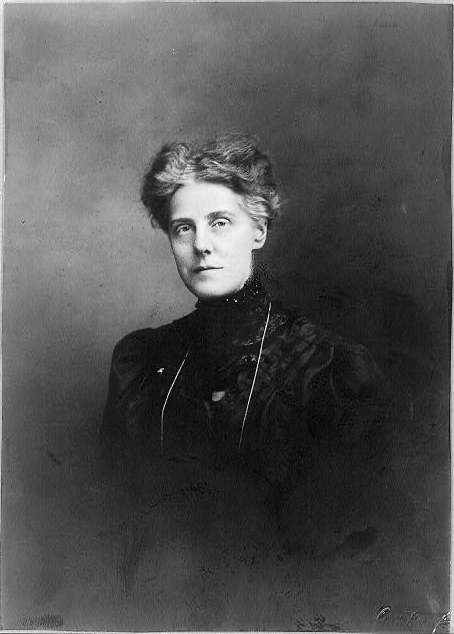
Anna Jarvis around 1909. Image courtesy of the Library of Congress.
Anna Jarvis was Ann’s and Granville’s ninth child and the only daughter who survived to adulthood. Educated at Augusta Female Seminary, she worked as the first female literary/advertising editor at Fidelity Mutual Life Insurance in Philadelphia. When her mom died on May 9th, 1905, Anna was heartbroken. She never forgot something her mother had said in a Sunday school lesson. Her mother hoped someday, someone would create a memorial day for mothers, to honor “the matchless service she renders to humanity.” Therefore, Anna decided to be that someone.
Ann worked tirelessly to have this holiday come to pass, but for her it all went wrong. Within a few years, florists, card companies and candy makers turned it into a commercial frenzy. She wanted the day to be honored with handwritten letters, visits, and one white carnation for living moms and a red for deceased moms. Carnations were her mother’s favorite flower.
For as hard as she worked to start Mother’s Day now she was filing lawsuits to stop it. I feel she went a little mad, because she crashed a confectioner’s convention. She was arrest in 1925 for disturbing the peace at an American War Mothers event selling carnations.
She told the press “I wanted this day to be a day of sentiment, not profit.” and “A printed card means nothing except that you are too lazy to write to the woman who has done more for you than anyone in the world.” In 1944 she was committed to Marshall Square Sanitarium, where she died penniless. It turns out that the industry she hated paid for her stay.
To recap the events; Julia Ward Howe planted the peace idea, Ann Reeves Jarvis did the grassroots organizing and Ann Jarvis got it made official then spent 30 plus years regretting it.
Anna Jarvis created Mother’s Day to honor her mother’s legacy of service, not to generate profit. Yet the holiday she championed was quickly overtaken by the very commercialism she despised. Her objective was simple, a hand written note, not a generic card. She believed mass produced messages meant nothing, especially when they cost so much. A visit, a phone call saying “I’m thinking of you and I love you” those are the gestures that matter. Time moves so fast. Commercial items don’t last, but a kind word said with love lasts forever. The original Mother’s Day traded in time, not money. Remember, the most meaningful gifts still can’t be bought.