The $1.00 Bill Is Hiding a Message
“The value of a dollar is social, as it is created by society” quote of Ralph Waldo Emerson, who was an American essayist, lecturer, philosopher, minister abolitionist and poet.
Last week I dove into the story of how money was created. So this week, it only felt right to turn to U.S. currency itself. We handle dollar bills every day, but how often do we actually look at them? Do you know whose face is on each one or what all those symbols and Latin phrases mean? I first became interested in symbols after reading “The DeVinci Code”. The protagonist, Robert Langdon, cracks every clue by decoding symbols. I wondered if I studied symbols would I be able to decode life’s complexities as well? But I found the subtleties of decoding almost impossible. Then one day as I was pulling out a dollar to make a payment, I realized I could start my exploration with my one dollar bill. There is a lot of history on the flip side and once I learned the meanings I found it was a great ice breaker whenever I would attend a dinner party.
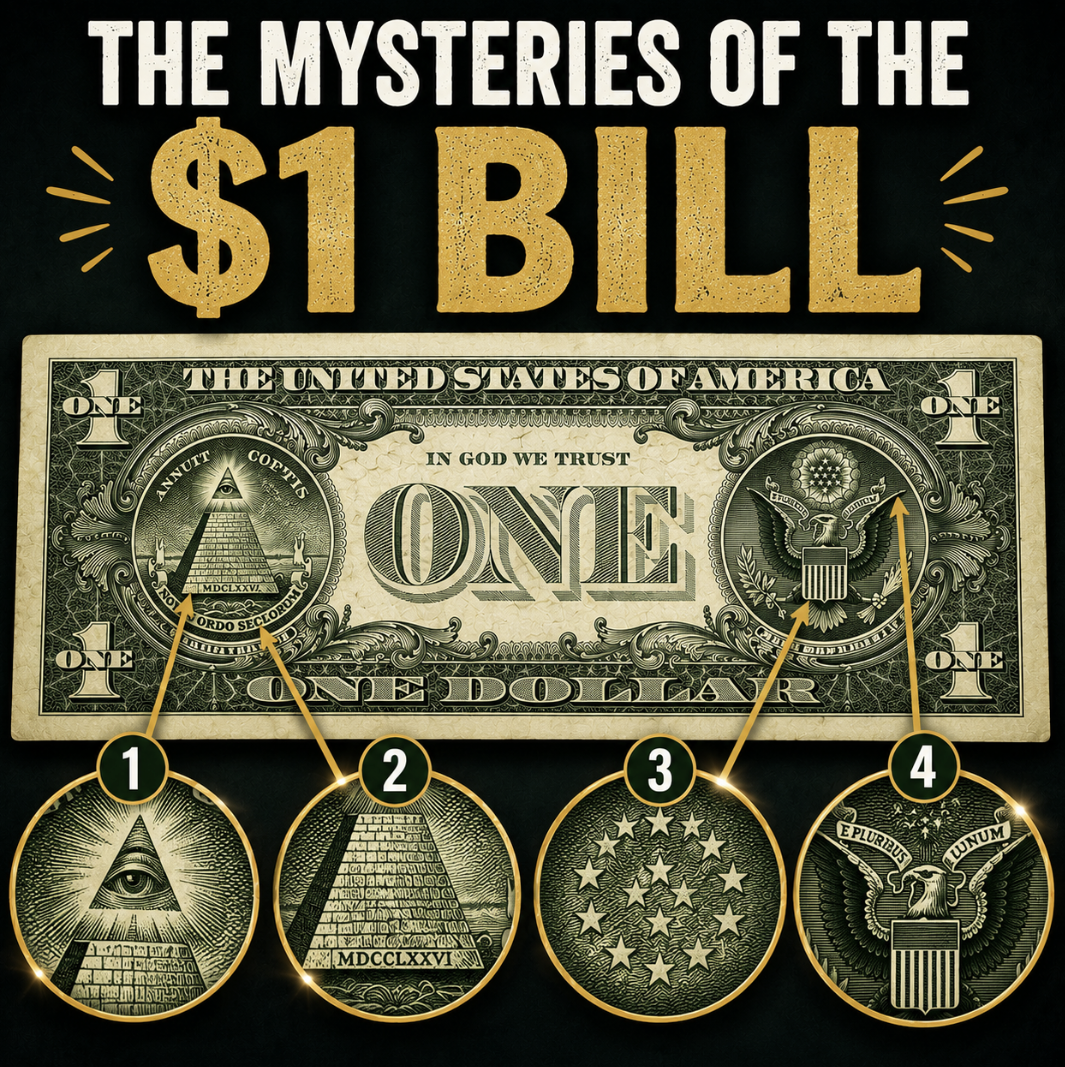
First a little back story. Right after the Declaration of Independence, the Continental Congress decided America needed an official seal. We had a flag. Now we needed a logo. We called it ” The Great Seal “. The seal has two parts and they printed both on the flip side of the $1 bill. On the left, you’ve got the pyramid. On the right is the eagle. Let’s start with the pyramid and the glowing eye floating on top.
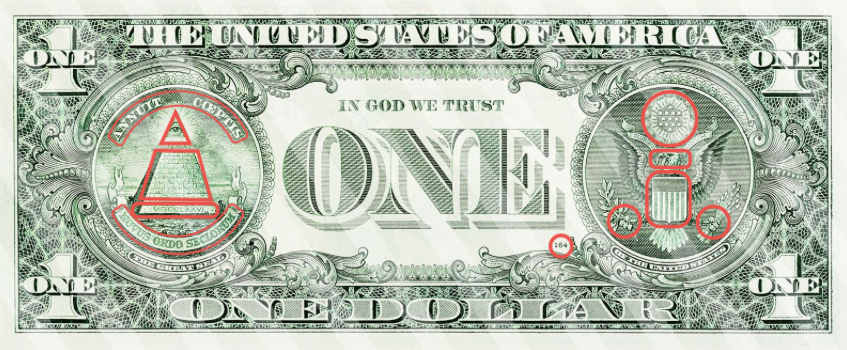
“The Eye of Providence”. People call it a Masonic symbol, but here’s the truth. The eye means God is watching over America. The Latin above it says “Annuit Coeptis” which translates to “He has favored our undertakings”. This symbol was super popular in the 1700s, it was used like an emoji.
The Pyramid, represent “Strength and Duration.” Looking at the Pyramid, you will notice the left side and bottom are in shadow. The right or western side is not shown. One explanation about the shading is to suggest that the country was just beginning and had not moved west yet. The pyramid has 13 steps for the 13 colonies. It’s unfinished because America still is a work in progress. The base of the pyramid is the Roman Number MDCCLXXVI, or 1776. And the words “Novus Ordo Seclorum” meaning “A new order of the ages”. No secret societies. Just Founding Fathers who were really into Latin phrases and classical symbolism.
The Eagle side is way less “conspiracy” and way more straightforward. The bald eagle is holding an olive branch in one talon for peace, and arrows in the other for war. His head faces the olive branch. The message, “We prefer peace, but We’re ready to fight.”
The shield on the eagle’s chest has no support, symbolizing America stands on its own. There are 13 stripes for the 13 colonies. Above his head is a cloud with 13 stars forming a constellation. The arrangement of the stars is in the form of the Star of David. Why? George Washington, wanted to honor Hayim Solomon, a wealthy Philadelphia Jew. Mr. Solomon wanted no personal reward for his service to the Continental Army, but he did want something on the new money to reflect on the Jewish people. Finally, the eagle’s beak is holding a banner that says “E. Pluribus Unum,” “Out of many, one;” 13 colonies becoming one nation.
And here’s the wild part, the number 13 shows up at least 7 times on the $1 bill. 13 steps on the unfinished pyramid. On the eagle side, the eagle holds 13 arrows in his talons and, 13 leaves on the olive branch, 13 stripes on the shield and 13 stars, 13 letters in E Pluribus Unum, 13 letters in Annuit Coeptis, They really were making a point about those 13 colonies.
So now pull out your one dollar bill and look at it closely. It contains a dense layer of symbolism.The pyramid, the eagle, the Latin phrases, each element references the thirteen colonies. None of it was chosen at random. The Founding Fathers deliberately embedded a narrative into our currency. The dollar bill has a message and we just decoded half of it. Should I break down the rest? Comment “Part 2” and I will.
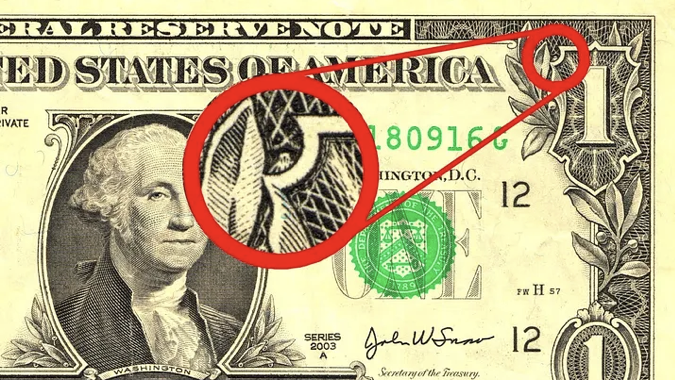
More hidden messages, this one I’ll explain on pt.2
Extra: Ever notice only dead people show up on U.S. bills? There’s a reason. Federal law says no living person an be on U.S. Currency or coins. The idea started with George Washington. He didn’t want his face on money while he was alive. He thought it looked too much like a king on a coin. The rule isn’t only for presidents, Hamilton and Franklin were famous Americans who shaped the country and are honored on money.
$1.00 George Washington, 1st President
$2.00 Thomas Jefferson, 3rd President
$5.00 Abraham Lincoln, 16th President
$10.00 Alexander Hamilton, 1st Treasury Secretary
$20.00 Andrew Jackson, 7th President
$50.00 Ulysses S. Grant, 18th President
$100.00 Benjamin Franklin, Founding Father
Next post: How a Poem Written in War became our National Anthem.