Part 2: My Mother’s Memories
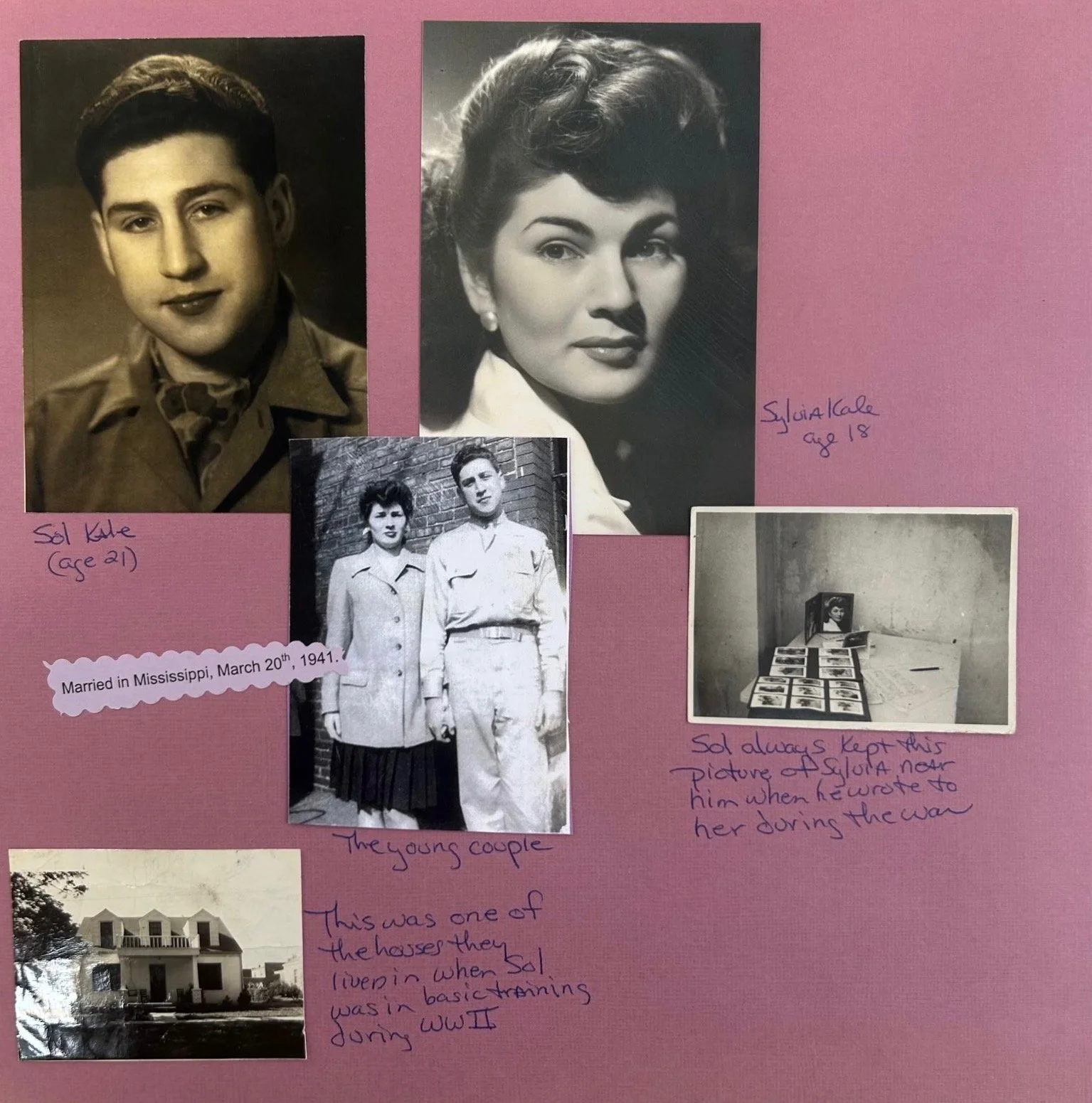
After my mother told us the immigration story of her mother, she launched without a pause into her own love story of how her mother found the love of her life, my dad. My mother seemed to love this story the most because whenever she told it she embellished her memories with random items like, chocolate bars, dead gardenias, cigar rings, and used sweaters.
Her story always started when she met her best friend, Miriam, in kindergarten. Remember both girls were tall, therefore they would always be seated in the back row.
“On my first day of school, Miriam and I took each other’s hand and pledged to be best friends, forever! and we are. Along the way we included four other girls to our club, Bea, Ann, Elaine, and Ilene. We called ourselves the Humboldt Park Adorables, and we’re still best friends sixty years latter!” Here she always stopped to reflect on her good times as a young girl and to scratch the back of head.
“I remember this day like it was yesterday, the year was 1941, the sun was shinning and I was very happy. I was turning eighteen and my mother felt I needed a new dress. My mom was a seamstress and she made both her clothes and mine. My older sister Sara Lee, got a job as soon as she could so she could buy ready made clothes. On this day my mother decided we would take the trolley to State Street and shop at the marvelous department store, Marshal Fields, the most glamorous place to shop. When we entered the intersection of State and Randolph, we would always admire the clock that was attached to the building and then window shop, marveling at the latest fashions showcased in the displays. When we entered the store, on the Wabash side, we were assailed by the fragrance of perfumes, and looking up there was the most amazing stain glass dome. To me, entering Marshal Fields, was a privilege, a special treat.
On this day my mother and I took the escalator down to the basement. This is where the fabric’s were sold. The entire basement was dedicated to fabric’s. I remember the smell, it was a musty fragrance, not as beautiful as the perfume, but exciting non the less. My mother scanned the floor with an eagle eye and directed us to a section with cotton fabrics. (remember my birthday is August thirty-first, so it was hot).
As we were taking our time examining the material, a young man approached us.
” Hello, my name is Morrie, can I help you?”
My mother looked him up and without blinking said, “Yes, are you Jewish?”
Morrie looked at me, I was in shocked and embarrassed by my mothers question.
“Yes, I am.” Morrie replied, also feeling uneasy
“Well, this is my daughter, Sylvia. We are looking for material for a dress. She is turning eighteen. Do you have any Jewish boy friends?”
“Yes,” Morrie said, looking puzzled.
“Well, this Friday night, we are making a party at our house to celebrate Sylvia’s birthday. Could you come and bring five friends?”
“Yes!” Morrie responded.
And my mother gave him our address and told him what time to arrive.
Leaving the store my mother took my arm, we always walked arm in arm, as we loved each other so much.”(Here my mother always paused to look at me. She never took my arm when we walked and I don’t feel she loved me the same way as she did her mother.)
She continued; “We giggled all the way home on the trolley, especially when we realized we hadn’t purchased fabric, then we laughed even harder. We were so happy with her spontaneous plan. I couldn’t believe my little mother was so brave to ask a strange boy to invite five other boys to our home.
“Sylvi,” my mother said in a hushed tone, “Do not invite Miriam to our party. She is too beautiful. Invite your other Humboldt Park Adorable friends. I want you to shine.”
My friends mothers prepared a dish for them to bring to our house. Now, you must remember we did not eat chips/dip, carrots or nuts. These would have been too expensive. The mothers prepared gefilte fish, kugel, and latkes. We supplied candy from my dad’s candy truck.
That day my parents rolled up their thread bare rug and borrowed a radio in anticipation of us dancing. At seven the doorbell rang and I ran to answer it. Their stood six young Jewish men, and standing in the back was your father. The boys entered our apartment and stood to one side, while me and my girlfriends stayed close to my mother. My mother went into entertainment mode going up to each young man and offering them refreshments. At the same time checking out which one she would want for me. With the music playing the boys didn’t seem to want to dance, eat nor interact with us. Finally, one of them came up with an ice breaker.
“Want to go bowling?”
“Ok, we all agreed.” And off we went to the neighborhood bowling alley.
It was at the bowling alley, Sol, made his move.” (Here, my mother always looked at my dad, placed her hand on his, took a deep breath, scratched the back of her head, and went on with her story.)
“Sol, bought me a ‘Baby Ruth’ candy bar. I fell in love.We dated for six months. Every time he came to our house, he brought with him a present for my mother. It was always some broken piece of a porcelain statue or dishes, from his knick knack store. He always brought me used sweaters.
At this time, World War II was raging and your dad was drafted. He was sent to Grenada, Mississippi to a camp called Fort McCain. Before he was going to be shipped out he wrote to me and asked if I could visit him. I asked my mother.
“Yes, Sylvi, I think we should go. I also, feel we should ask Sol’s mom, Kate.”
The three of us set out in early March for Union Station. This train station was full of young men in uniform and the activity was palatable. I was so excited to be taking this trip with my mom and Kate. Although, Kate was absolutely no fun.
When we arrived at the camp. Your dad did not greet us. Instead he had his friend Morrie, (not the same Morrie from Marshal Fields) find us at the station. He told us that that morning Sol was so excited we were coming he didn’t complete a project and therefore, had to spend the day peeling potatoes. Morrie, escorted us to a room near the camp and told us Sol would come as soon as his KP, or Kitchen Patrol was over.
I was glued to the window waiting for Sol to arrive. And when I saw him, I ran out of the house right into his arms. He spun me around, we laughed and kissed. My mother was watching, she and Kate came out to greet Sol too.
“So, Solly,” my mother said, “I feel you love my Sylvi. I think you should get married. Now!. What do you think Sol? Do you want to marry Sylvia?”
Your dad looked at me and smiled and said “YES!, do you want to marry me Sylvia?”
I said ‘yes’ because I really had nothing else to do.” Here, my mom would laugh and say how adorable she was. Then shake her head, and scratch the back of her neck. My father loved this part of the story. He always sat and listened with bright eyes beaming at her with a sweet smile.
“We were married the next day in a little chapel on base. My mother was at my side, Morrie, was Sol’s best man. Sol, had no money, therefore, my wedding ring was a cigar band, and for flowers he purchased a gardenia that wilted ten minutes after he pinned it on my tattered dress.
Right after the ceremony, both my mother and Kate boarded the train to return to Chicago. As I kissed my mother goodbye, it hit me that I was married and not returning to my cozy home. I am a Jewish woman, now living in MISSISSIPPI!
Sol, was able to rent a room in a house near the base where I spent long days wondering what to do. Soon I met another new bride and we tried to bond. Together we joined other girls who were helping in the war movement. I can’t recall what we did, but it did pass the time. My mother, would send me little gift packages of my favorite candies. I never heard from Kate!
At this point in my mother’s memory, she always became vague. Her story always shifted from feelings of adventure to feelings of revenge. The one thing that was always clear in her memory was her intense dislike of my father’s family. The immigration of Kate’s family is obscure, but the one interesting part is how her large family all left Russia together.
My mother’s story of Kate, “Kate, her five ugly sisters and one brother David also landed at Ellis Island. Kate’s family left Kiev around 1924 with their parents Radzinshi and Eli Levine . When Radzinshi, who changed her name to Rachel, died her girls all tried to jump into her grave. They were a queer bunch. The girls each had a mole on their face, Kate’s was located on the tip of her nose going down, which I thought made her look like a witch. Let’s see if I can remember the other sisters names; Fannie, Franie, Serki, Lilian, Kate and Ann. On their voyage over Kate met Esreal Kaluzna and Kate’s sister, Lilian fell in love with Esreal’s brother, Pacy.
Esreal’s parents were Minnie Muzer, and his father’s name was Bernard. His family had lived in a small community in Russia The funny story about Esreal’s parents was their height difference. Minnie, was four foot eight and Bernard was six foot three. Bernard used to carry Minnie around rather than wait for her to catch up. Minnie, was a much loved mother and grandmother. Three of your cousins are named for her.”
At this point in my mother’s story I would watch as she sat back in her chair. She would sit up straighter planting her feet together, lick her lips, scratch the back of her head, take a deep breath and continue.
“After spending four months at the base, your dad was shipped out and it was time for me to return to Chicago. My parents welcomed me home, Kate’s family did not even acknowledge me. I recall going to visit them, the ugly sisters were all sitting around a card table playing canasta, not one of them looked up to greet me. I sat down waiting for them to finish their hand, but no. Not one word of welcome. It was on this day I met Sol’s brother Irving’s wife, Beverly. Beverly, did not have the same issues I had with this family. She had been included right away. Beverly, was beautiful. She was a tall, thin, with beautiful red hair and sparkling hazel eyes.
“Hello Sylvia,” she greeted me. “I have been looking forward to meeting you.”
Sol’s brother, Irving ,came over too and the three of us talked and laughed. What a relief! I had companions. But, Sol’s oldest sister Bernice and her husband Herman did not greet me. Bernice, seemed attached to her mother, and Herman, appeared shy.
At twenty years old and married, my mother told me I had to contribute to the family. Sara Lee, married a soldier moved out and was self supporting. I got a job as a model for a coat company. But, after three weeks, I quit this job because the owner started chasing me around the factory. Then I went to work at a department store, but once again, the owner started to come on to me. Finally, I went to work for my father, helping him on his truck selling candy.
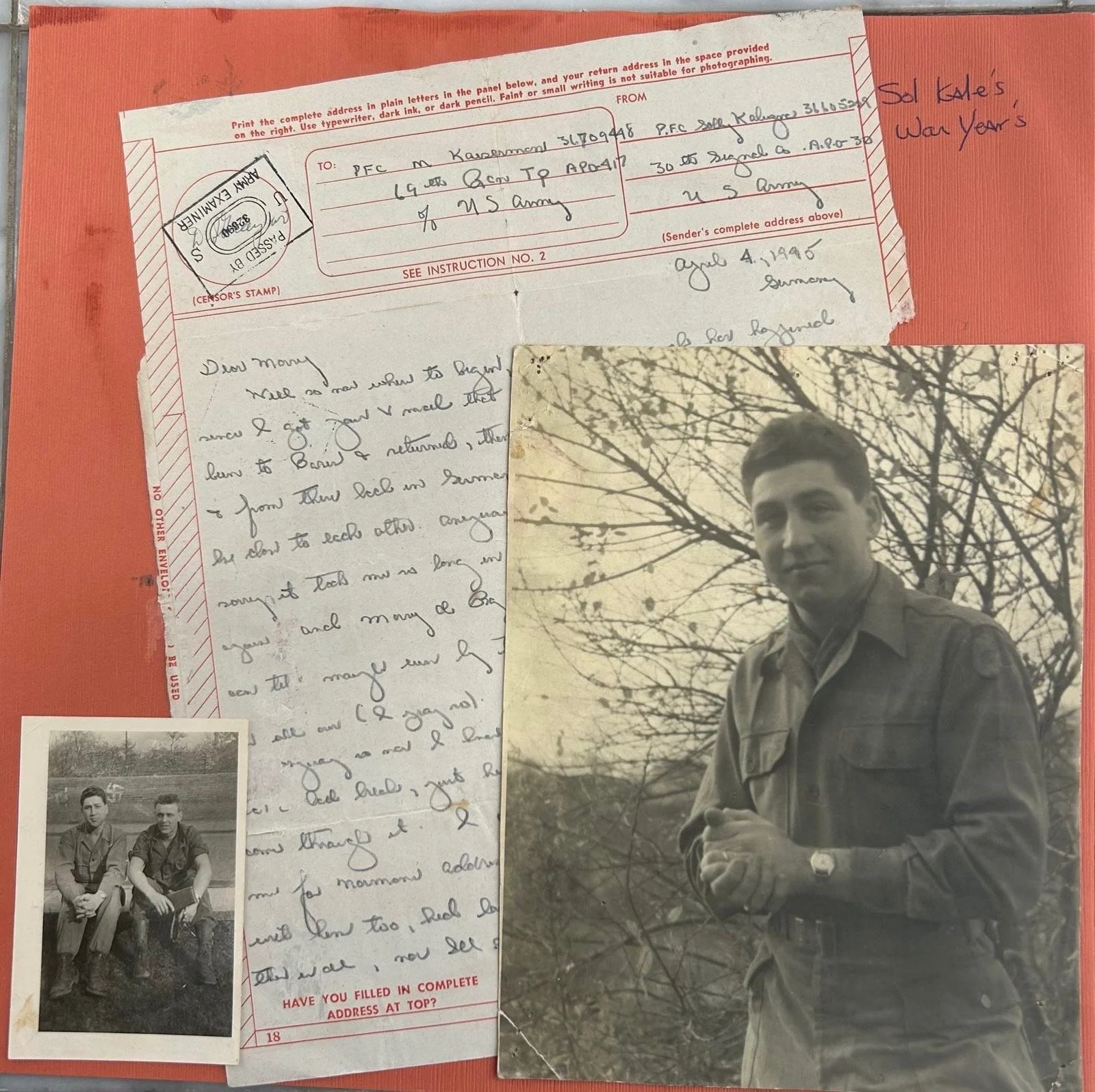
I hadn’t seen your father in two years and during that time, we’d exchanged letters, though I often wondered if he received mine. So, when the most wonderful letter arrived, that he was coming home, I was a nervous wreck. Would we still have that connection? But the moment he walked through my parents’ door in his uniform, it felt like no time had passed at all.”
Here again, she would pause, and my parents would stare at each other giving a nod of agreement. And taking a breath she continued.
“When your dad was discharged from the service he was offered the GI bill. The GI bill was enacted on June 22, 1944 by President FDR. This act provided World War II veterans with funds for a college education, unemployment insurance, and housing. Your dad, did not want to continue his education but he did take the money to help us get an apartment. Our first apartment was located in Wicker Park, and our dining room window faced the “EL” (the elevated train line that circled Chicago) On our first night in the apartment we sat down to eat by the window only to discover the people on the elevated staring at us. We were young and we thought this was so funny.
Your father went to work with his father, Esreal. Esreal sold used clothes on Roosevelt Road. His store had one light bulb and a free standing cast iron boiler in the center of the store for heat. His merchandise was piled high on wooden horses and sheets of plywood. Nothing was marked, nothing was clean. When your dad first went to work for his father, he didn’t know what to do. So he went in the alley with his friend, another Morrie, who also worked for his father, and the two men pitched pennies. This was a popular gambling game where players take turns throwing coins at a wall, and the coin coming closest to the target wins.
At the end of the first week Esreal paid your dad. When your dad came home he was upset.
“Sylvia, my dad paid me for a complete week of work. But I didn’t do anything. I am going to change, and make you and my dad proud.”
“And he did! From that moment on he worked with his father at the used clothing store. He had many ideas to help improve the store’s appearance. One idea was putting the pants in order on one of the tables, shirts on another, and jackets on another. However, this did not please his father, and every day they fought, and every evening your dad called to say he was sorry. Yet, he wasn’t deterred. He paid attention to the changes in the community. He noticed the police department was expanding and needed uniforms. He also noticed that men coming home from the service did not want their uniforms and left them at bus and train terminals. He took these military uniforms, transformed them into police uniforms by changing the buttons and getting the police patches. Your father is a true entrepreneur.”
How he started his empire is next week’s edition.
I hadn’t seen your father in two years and during that time, we’d exchanged letters, though I often wondered if he received mine. So, when the most wonderful letter arrived, that he was coming home, I was a nervous wreck. Would we still have that connection? But the moment he walked through my parents’ door in his uniform, it felt like no time had passed at all.”
Here again, she would pause, and my parents would stare at each other giving a nod of agreement. And taking a breath she continued.
“When your dad was discharged from the service he was offered the GI bill. The GI bill was enacted on June 22, 1944 by President FDR. This act provided World War II veterans with funds for a college education, unemployment insurance, and housing. Your dad, did not want to continue his education but he did take the money to help us get an apartment. Our first apartment was located in Wicker Park, and our dining room window faced the “EL” (the elevated train line that circled Chicago) On our first night in the apartment we sat down to eat by the window only to discover the people on the elevated staring at us. We were young and we thought this was so funny.
Your father went to work with his father, Esreal. Esreal sold used clothes on Roosevelt Road. His store had one light bulb and a free standing cast iron boiler in the center of the store for heat. His merchandise was piled high on wooden horses and sheets of plywood. Nothing was marked, nothing was clean. When your dad first went to work for his father, he didn’t know what to do. So he went in the alley with his friend, another Morrie, who also worked for his father, and the two men pitched pennies. This was a popular gambling game where players take turns throwing coins at a wall, and the coin coming closest to the target wins.
At the end of the first week Esreal paid your dad. When your dad came home he was upset.
“Sylvia, my dad paid me for a complete week of work. But I didn’t do anything. I am going to change, and make you and my dad proud.”
“And he did. From that moment on he worked, and tried many different ideas to help improve the store. One idea was putting the pants in order on one of the tables, shirts on another, and jackets on another. However, this did not please his father, and every day they fought, and every evening your dad called to say he was sorry. Yet, he wasn’t deterred. He paid attention to the changes in the community. He noticed the police department was expanding and needed uniforms. He also noticed that men coming home from the service did not want their uniforms and left them at bus and train terminals. He took these military uniforms, transformed them into police uniforms by changing the buttons and getting the police patches. Remember this was his job when he was in the army. Your father is a true entrepreneur.”
How he started his empire is next week’s edition.