Dinning with Decorum
“Friends and good manners will carry you where money won’t go.”quote by Margaret Walker, an American poet and writer.
Prepping for a dinner party, I got obsessed with YouTube table manners tutorials. Twelve guest were coming over and suddenly I was on a mission to teach them all proper etiquette. Turns out mastering table manners is the unsung hero of connection. They aren’t just rules, they’re reputation. You get them right, dinner becomes a connection. You get them wrong, and people decide who you are before the appetizers arrive.
When my company was seated, I noticed how they used their napkins.
“Ok,” I started, ” I spent the last week studying table manners, and I’ve noticed that none of you used your napkin correctly.”
My guests’ eyes widened in surprise, and the air grew thick with awkward silence. They were used to my unfiltered comments, but this time they exchanged skeptical glances. Still, I detected a spark of curiosity behind their raised eyebrows.
“Okay, Hallee, what do you want to teach us today?”, one of my friends, who is used to my desire to tell stories inquired.
“Well, tonight, I’m excited to share a new topic : table manners, inspired by the many YouTube videos I watched this week. While watching them, I realized my own etiquette skills need a refresher.” To my delight, they were fully engaged, asking thoughtful questions and jumping into the conversation.
With my friends cheering me on, I dove into my newfound knowledge. Since I love kicking things off with a little backstory, I told them: ” I discovered that table etiquette goes all the way back to Greece, in the writings of Homer. Back then, people used a chunk of bread dough as a makeshift napkin to wipe their hands after meals. Later, in the 12th century, the church started formalizing the rules. Written into monastic codes called the Rules of St. Benedict. In short, table behavior was seen as a reflection of moral character. So, let’s start with the napkin.
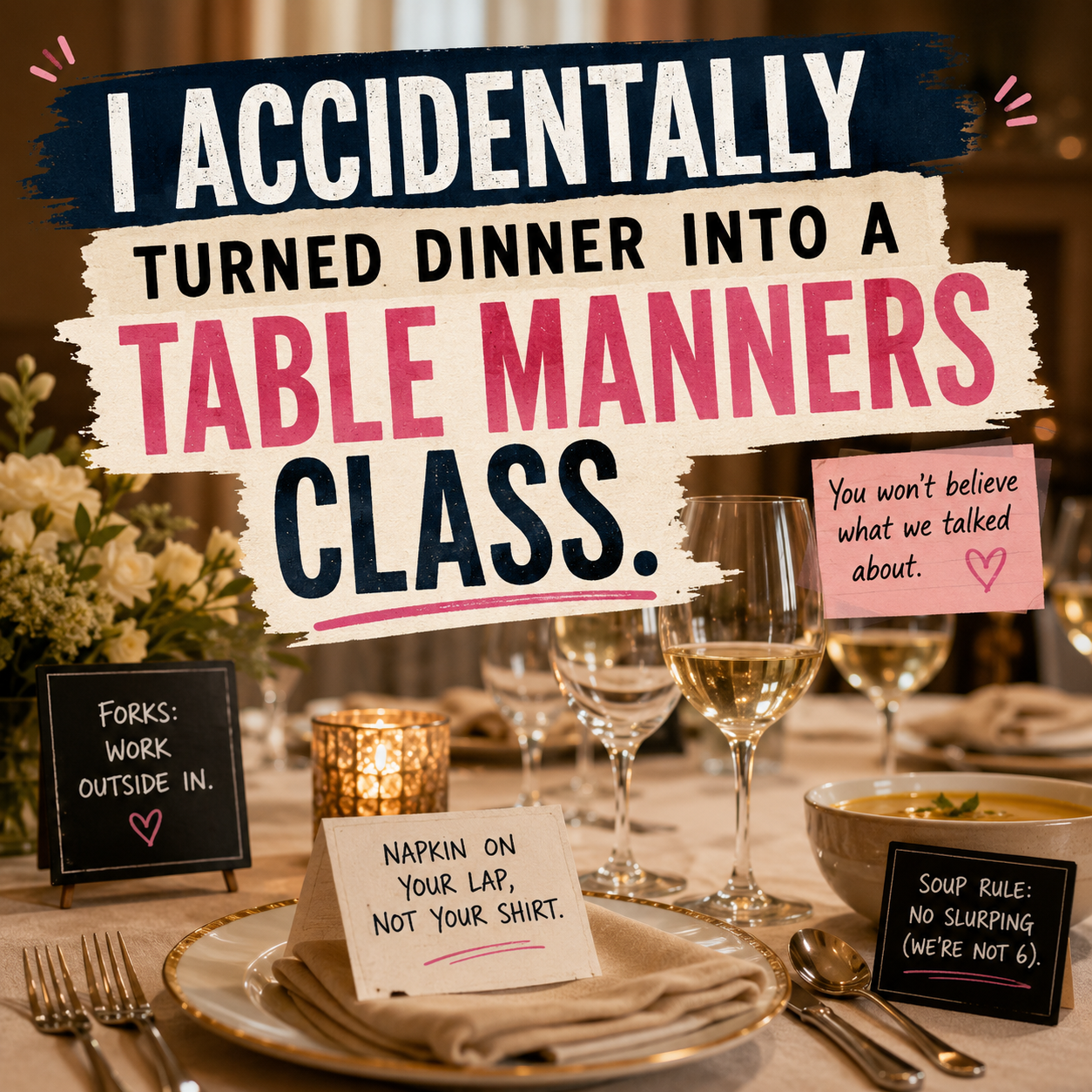
First rule: it goes on your lap, not tucked into your shirt like a bib. Unless you’re having a lobster dinner. When you sit down, gently unfold your napkin and place it on your lap with the fold facing you. If you need to leave the table, place the napkin on the back of your chair, fold it, never wad it up. Use it only for wiping your mouth, and never as a tissue. And finally, when you are done eating, place the napkin to the left of your plate. Now, let’s move on to wine.”
I looked around the table and saw that everyone was engaged, so it gave me confidence to continue.
“I watched another YouTube on French table etiquette where the influencer explained that you should never clink wine glasses with a toast because they’re made of delicate material and might shatter. Instead, the French way is to lift your glass, make eye contact, and nod slightly, essentially saying I see you and wish you well. Also, once you’ve taken a sip from your glass, it is customary to always sip from the same place.” As Americans, we’re used to clinking glasses, so it’s no surprise my friends weren’t keen on changing that tradition.
“Moving on to the real drama: Forks!. Okay, fun fact, forks were late to the party. Ancient Greeks used fingers and bread. The Church actually thought forks were scandalous. “God’s gift was fingers,” They would say. And I must admit I prefer eating with my fingers, it saves so much time. However, the modern rule with forks, since now there are so many placed around the plate is work outside in. Salad fork’s on the left farthest out. Dinner fork’s next to your plate. And above the plate it’s for dessert. Between bites, rest your fork on the plate, tines down.”
Looking around my guest were still fully engaged, so I continued.
“Next crisis: passing food has rules! In medieval banquets passing dishes was a power move. Servants did it, and who got served first showed rank. The church “emphasized serve others before yourself” as a virtue. But today we pass to the right, counter clockwise around the table. And salt and pepper are married, so they always travel together. Also, place the dish next to your neighbor instead of doing a handoff. Fewer drops, fewer regrets?”
OK, looking around the table I sensed they were still with me.
“Since we are serving pumpkin soup, and may I mention the pumpkin was grown on our farm, I feel we should discuss the silent soup slurp debate.”
Suddenly I realized my friends were leaning in, maybe they were truly interested because everyone’s been guilty of slurping.
“First the history lesson. In Ancient Roman the people loved slurping, In fact to this day in Japan, the people there slurp with pride. But, in the ancient times slurping meant you were hungry, poor or both. And around the 1500s, there was a courtesy book that read “No barnyard noises at the table.” So for our purposes, I learned that the spoon is passed away from you. Fill the spoon by pushing it through the soup away from your body. Slide it to your mouth, sip quietly. If the soup is too hot, wait. And don’t blow on it, blowing says “I’m six years old”. Last bit of soup left? Well, tilt the bowl away from you and spoon it. Oh yes, posture counts. Try to sit up straight.”
At this point I feel my company was afraid to try the soup. But once they were all served they became more jovial, and tried moving their spoons away and trying not to slurp.
“Soup spoons down, alright, my last one” I said. “Elbows on the table. The rule everyone thinks they know, but I bet you don’t know why. While we are actively drinking, cutting, chewing, passing, keep your elbows down. It gives your dinner partner space. But when there is no food on the table elbows are ok.”
After relating all my information, I was exhausted and ready to eat. That’s when I noticed it, my friends were suddenly very aware of their table manners. We started the night with Homer’s bread dough and judgmental monks. Then it ended with Russ getting a standing ovation for napkin placement. Somewhere between ancient Greece and my dining room table, etiquette stopped being rules and became…kind of fun.